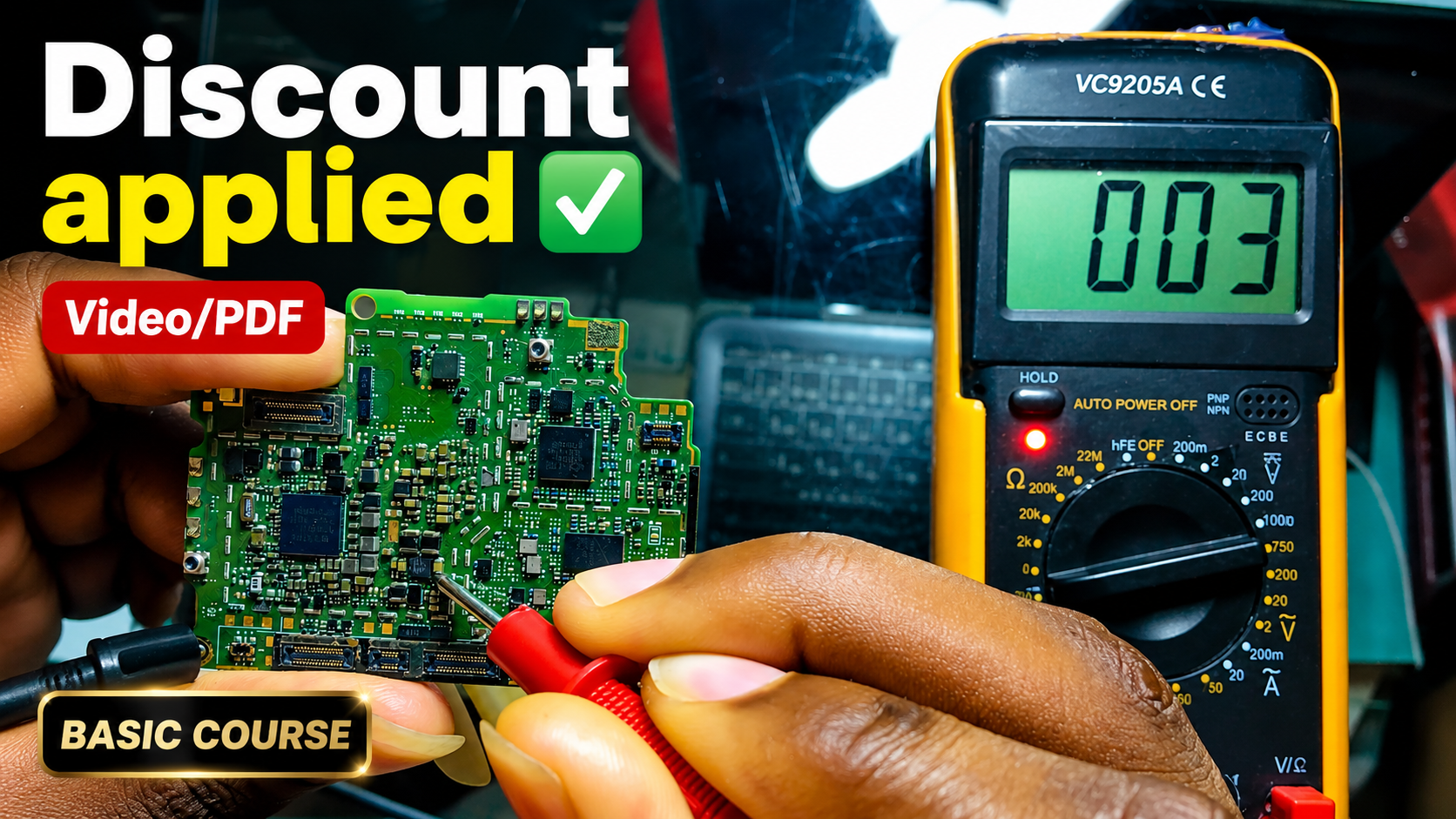
How to read a phone schematic diagram
Short answer: To read a phone schematic, start with the block diagram to see how the battery, PMIC, charging circuit, CPU and other sections connect. Then follow a power rail by its net name across pages, read component labels (C for capacitors, R for resistors, U for chips), and use a boardview to find each part on the real board.
Block diagram first
A block diagram shows the main sections and how power and signals flow between them. It tells you where to look before you open the detailed pages.
Symbols and labels
- C = capacitor, R = resistor, L = coil (inductor), D = diode, U = chip, J = connector
- Net names, such as VBAT or VBUS, link the same line across different pages
- Values beside parts give capacitance, resistance or voltage
- Test points show where you can measure easily
Schematic vs boardview
The schematic shows how parts are connected. The boardview shows where they physically sit on the board. Use both: find the fault on the schematic, then locate the part with the boardview.