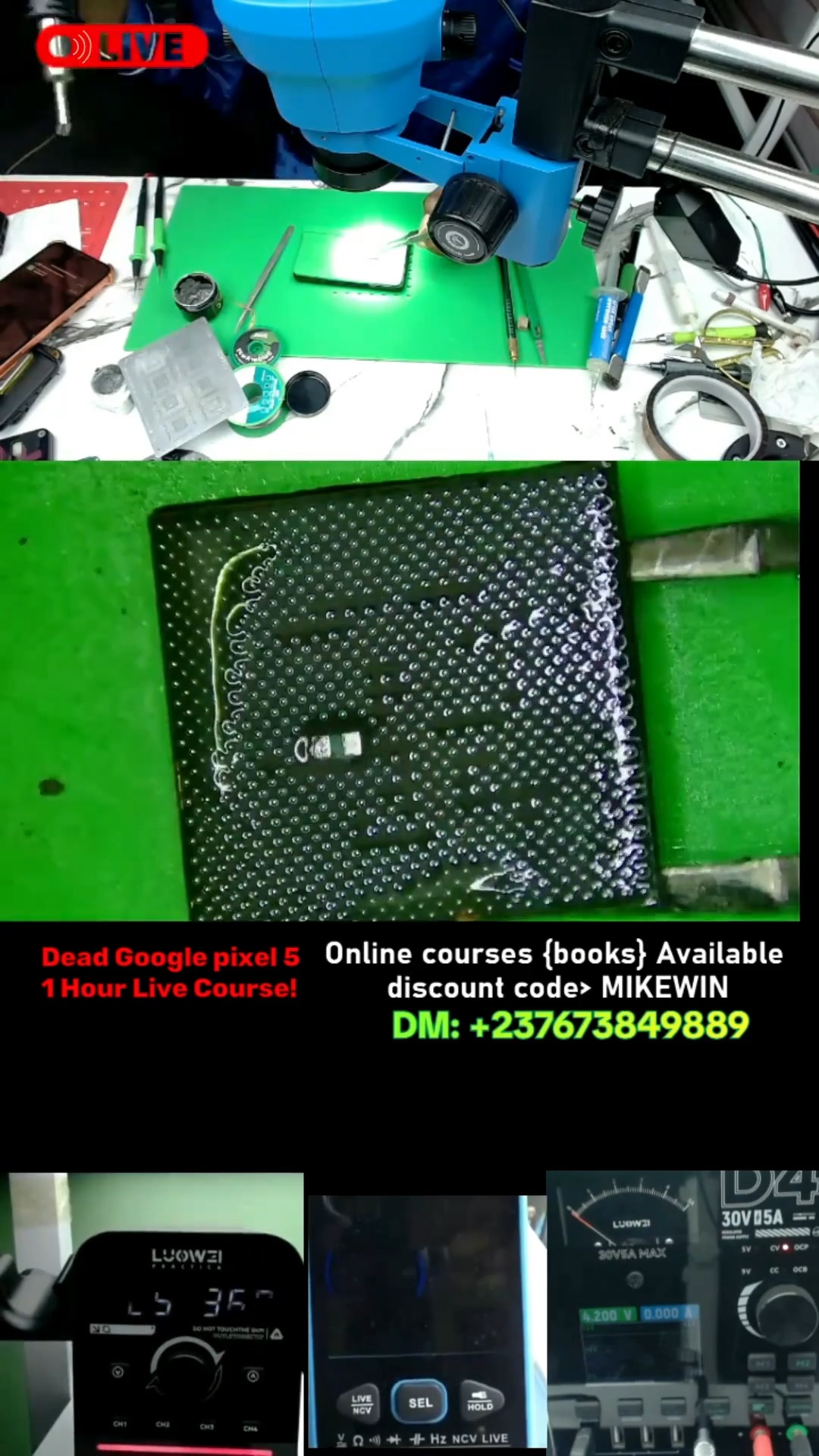
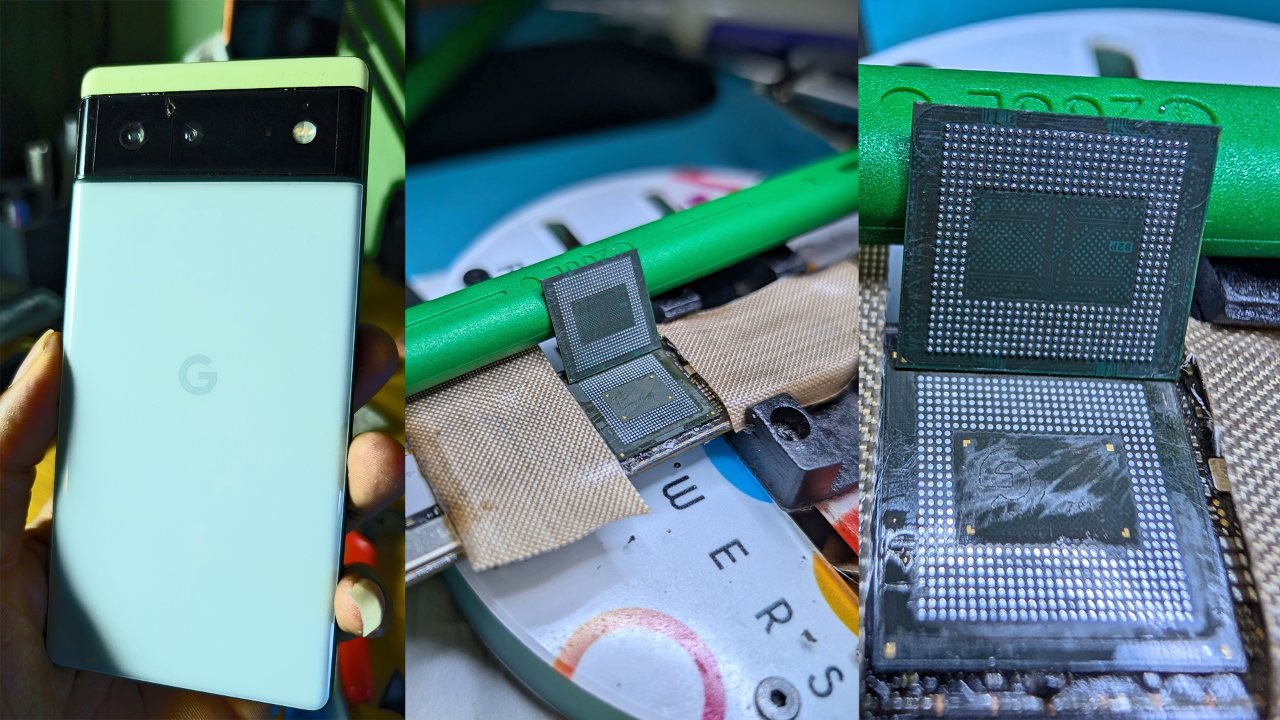
Google Pixel 5 Dead Boot Repair - Short Video
3:18 · Short circuit troubleshooting on phone boards
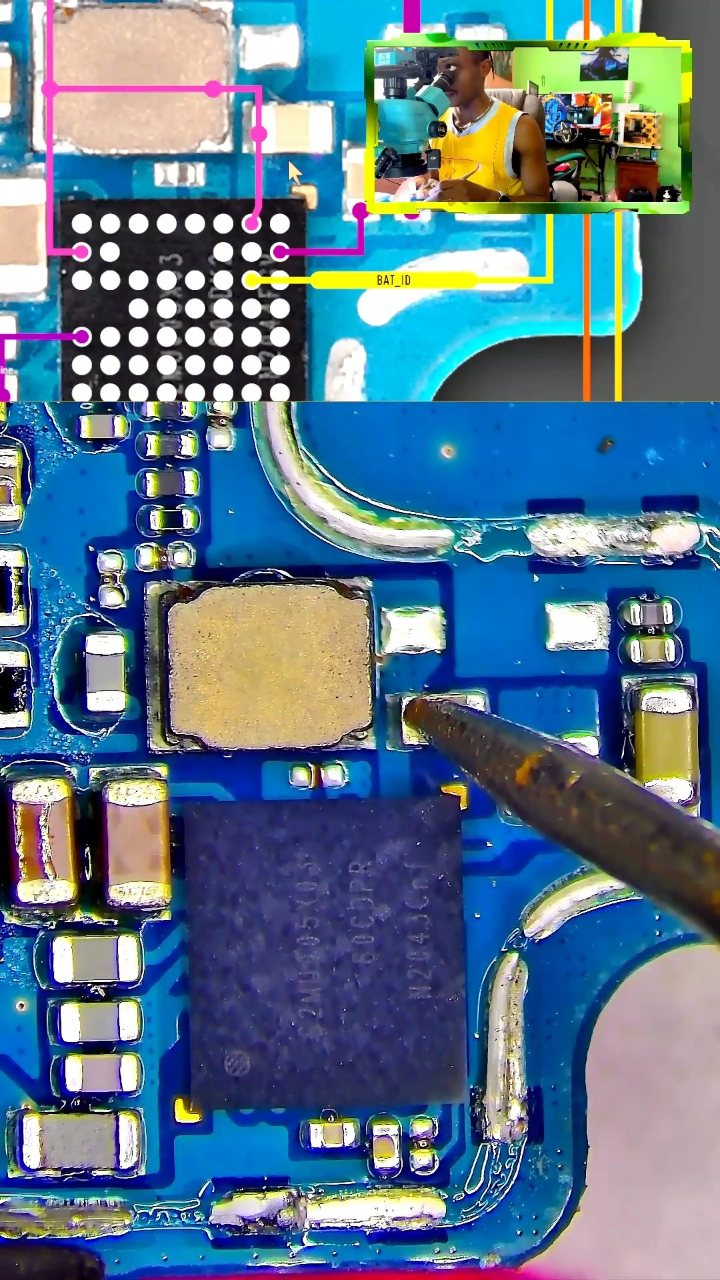
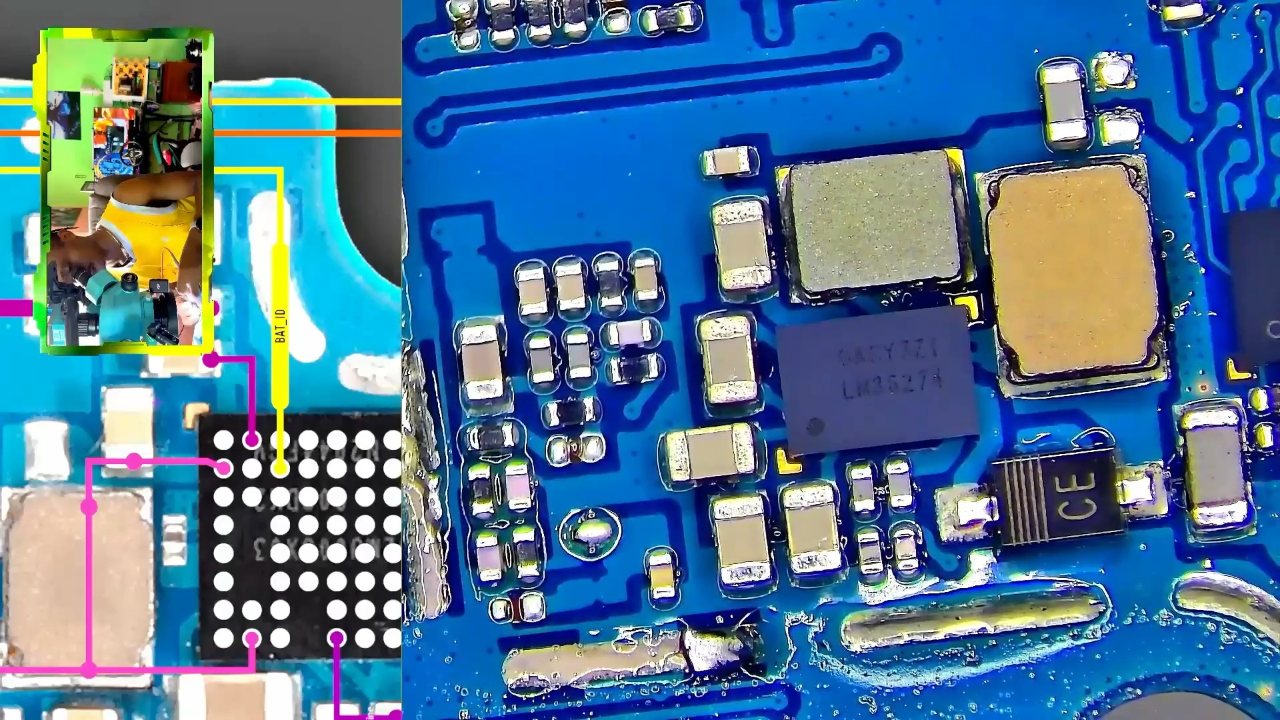
A shorted rail pulls voltage to ground and can make a phone dead, hot or unable to charge. The usual approach is to confirm the short with a multimeter, inject a limited voltage, then locate the heating component with a thermal camera, rosin flux or by touch.
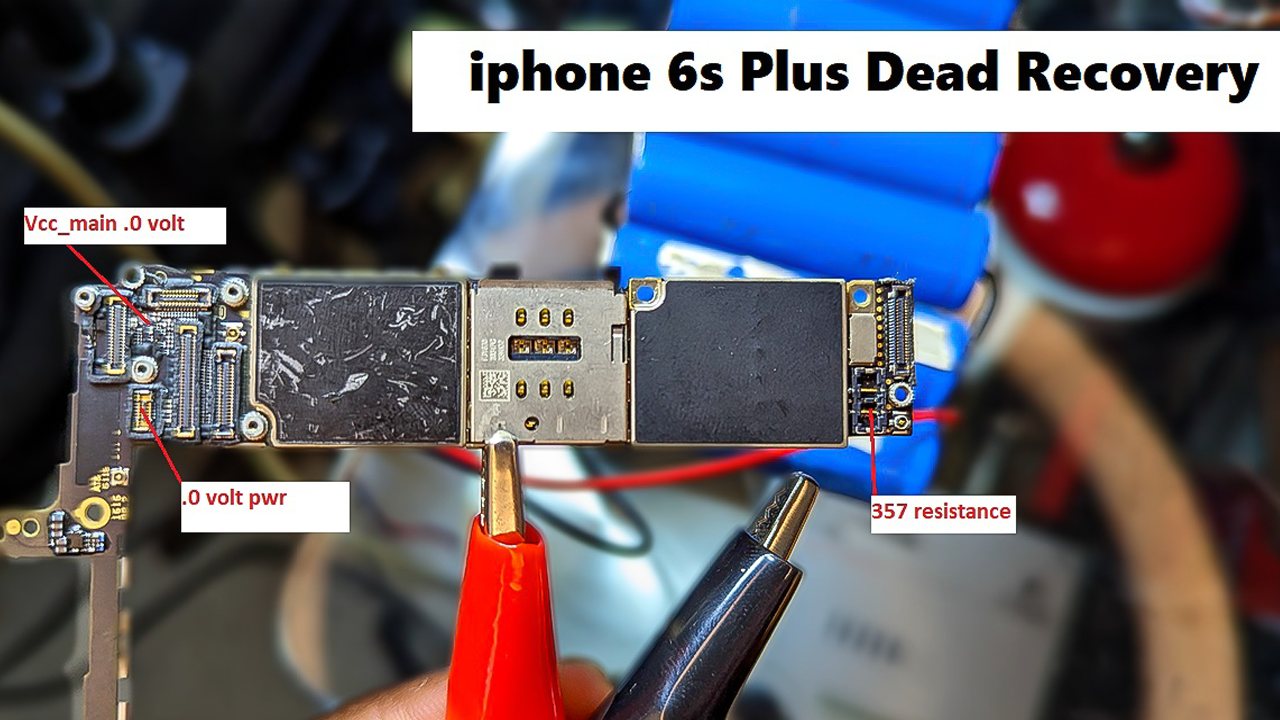
Confirm the short first: in diode mode a shorted line reads close to zero against ground, and in resistance mode it reads only a few ohms. Compare with the same line on a good board, because some rails naturally read low.
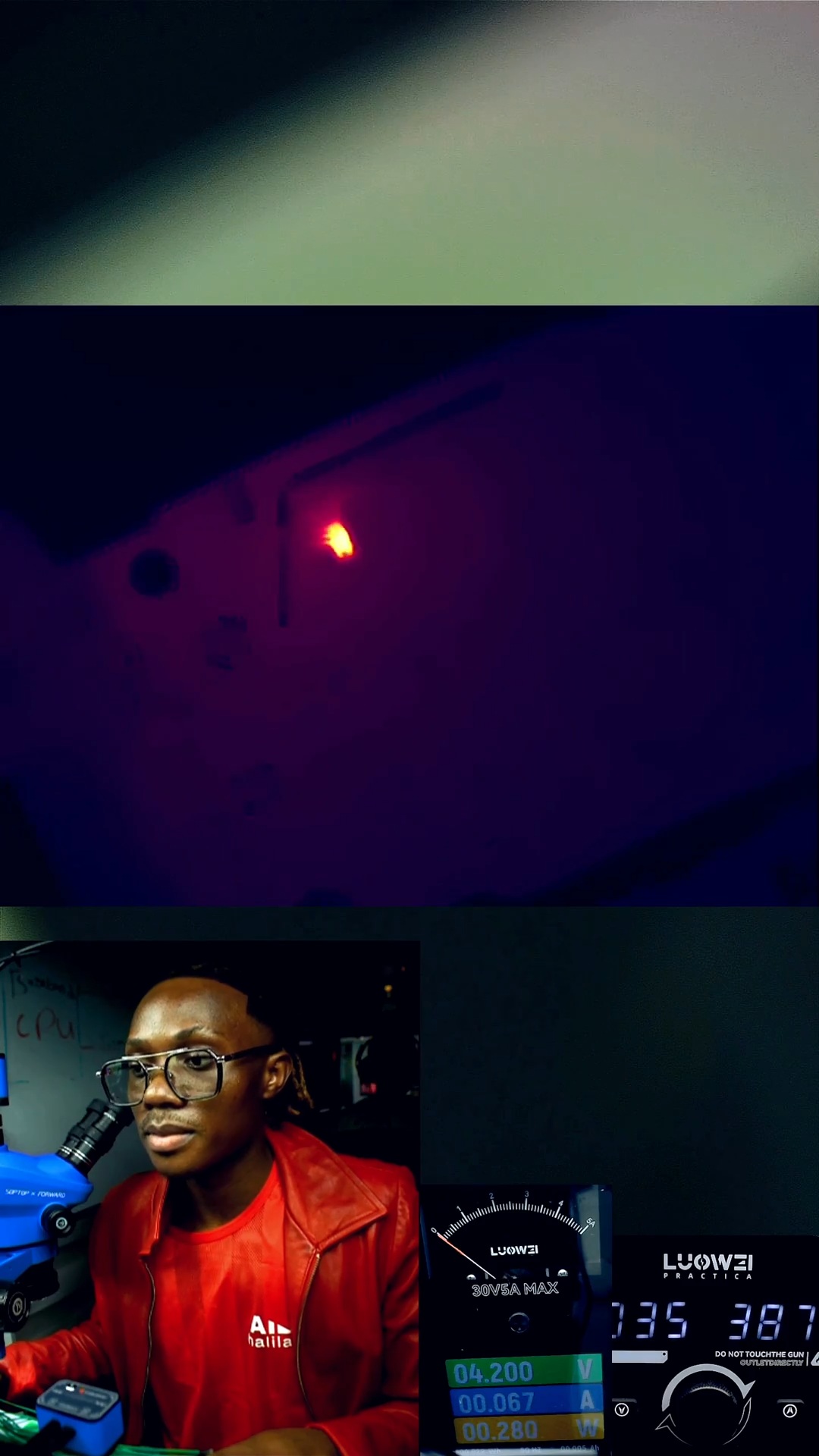
Inject voltage carefully. Set the power supply to the normal voltage of that rail (or lower) and limit the current, then connect it to the shorted line. The faulty part converts that current into heat. A thermal camera shows it instantly; rosin flux smoke or a drop of alcohol that evaporates first works when you have no camera.
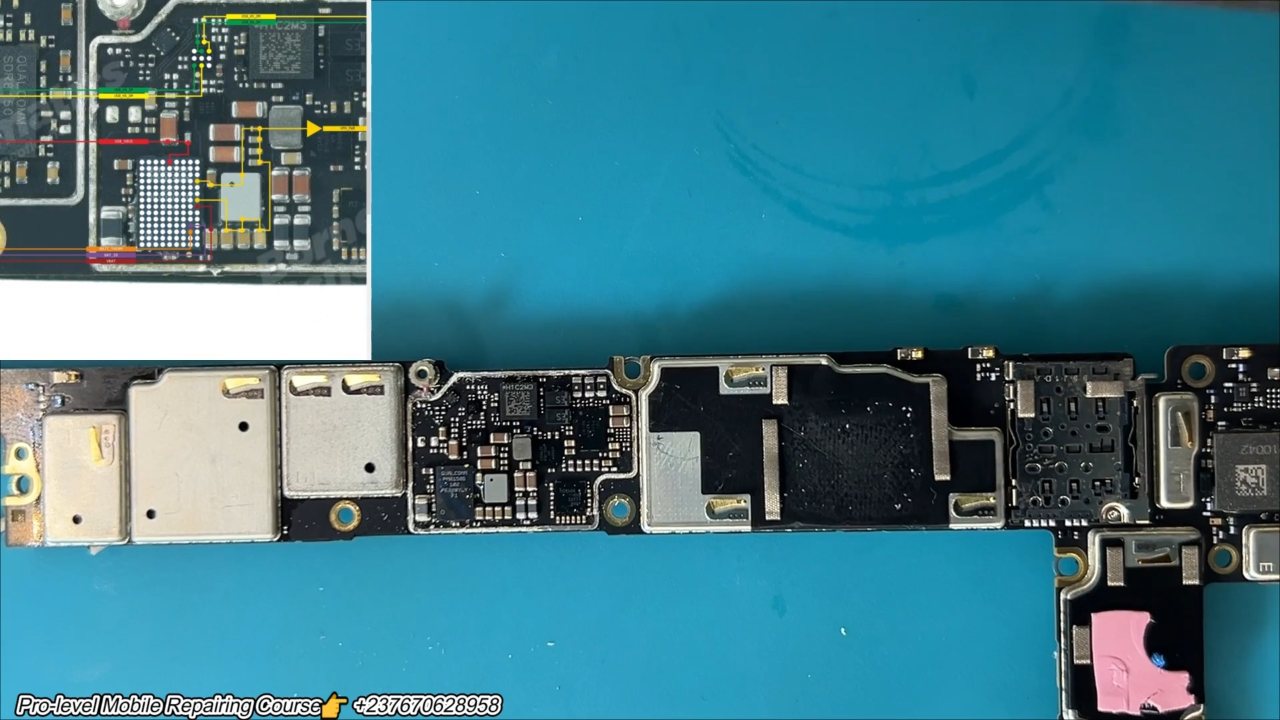
Small decoupling capacitors are the most common culprits. Remove the hot part, re-measure the line, and only then look at larger ICs. If nothing heats up, raise the current slowly and check the other side of the board and the parts under shields.
3:18 · Short circuit troubleshooting on phone boards

2:09 · Phone repair tools, microscopes and shop setup

2:32 · Short circuit troubleshooting on phone boards
14:13 · Short circuit troubleshooting on phone boards
1:08 · Phone repair tools, microscopes and shop setup

12:48 · Short circuit troubleshooting on phone boards

3:10 · Short circuit troubleshooting on phone boards
31:20 · Short circuit troubleshooting on phone boards

2:32 · Phone not charging repair

4:14 · Phone not charging repair

3:46 · Short circuit troubleshooting on phone boards
12:43 · Short circuit troubleshooting on phone boards

8:53 · Short circuit troubleshooting on phone boards

9:49 · Phone not charging repair
14:13 · Short circuit troubleshooting on phone boards
19:36 · Short circuit troubleshooting on phone boards
19:47 · Short circuit troubleshooting on phone boards

7:00 · No display and backlight repair
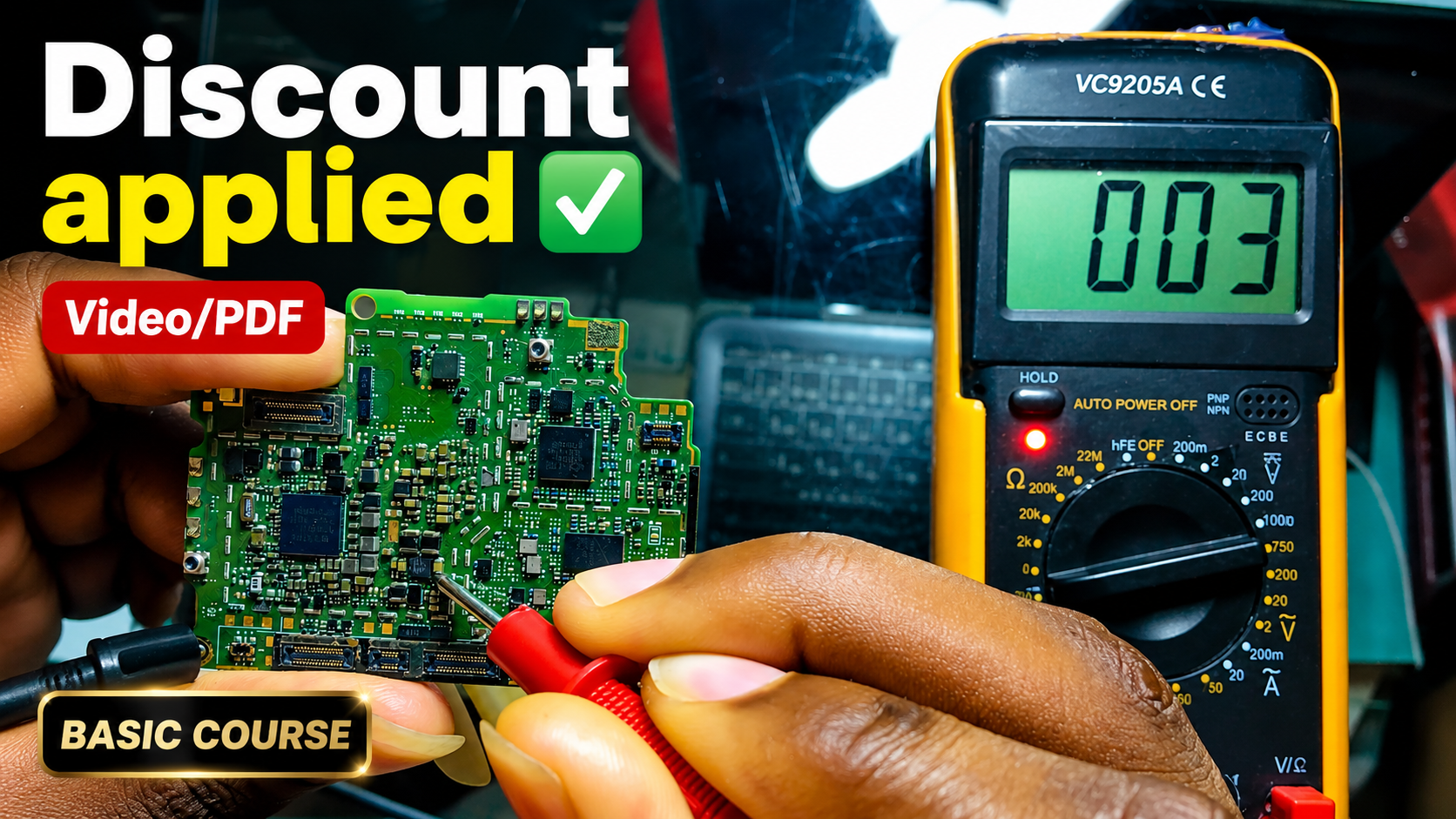
English repair videos with English and French PDF learning materials.

Advanced English video training for professional mobile repair work.
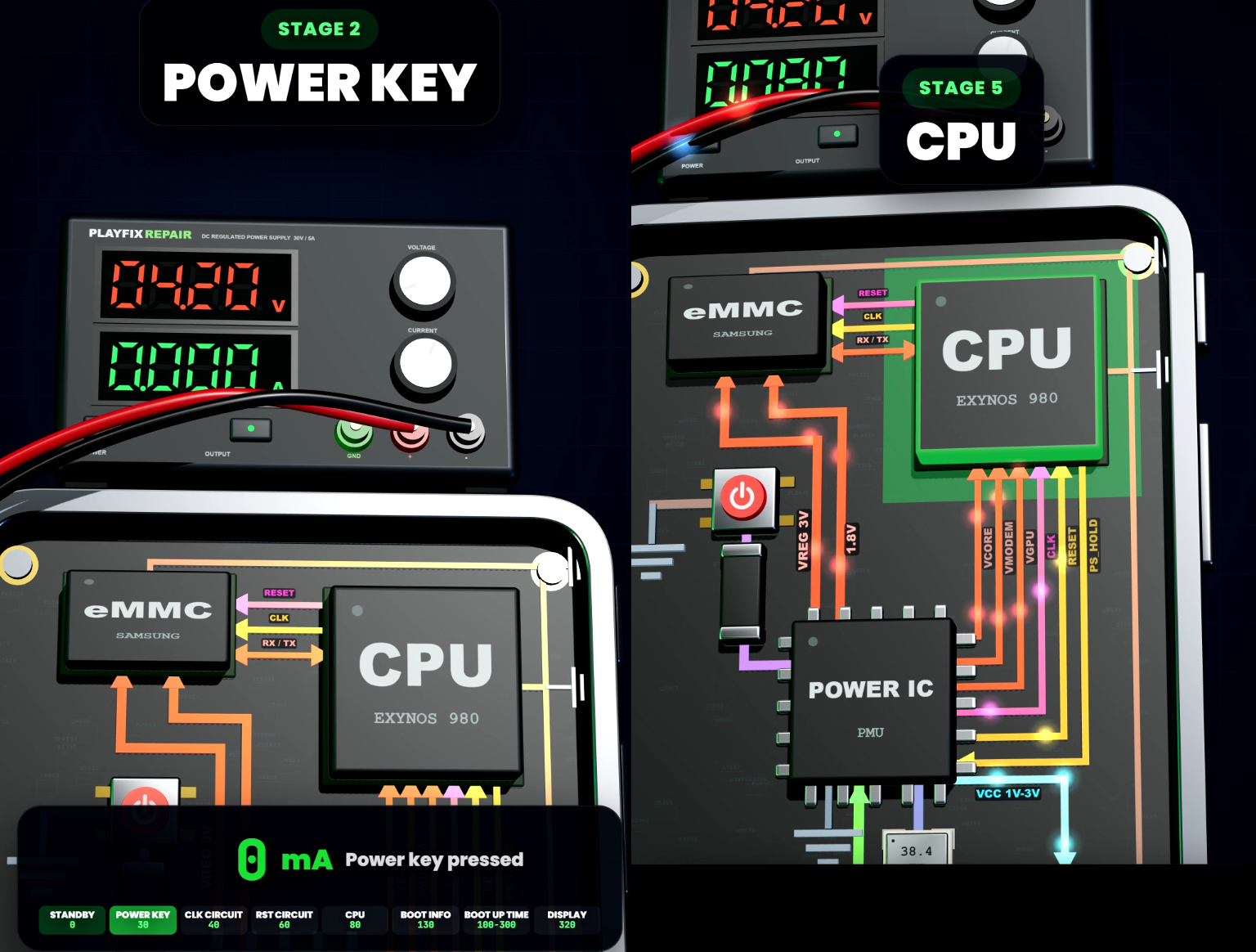
Learn how mobile-phone block diagrams connect ICs, power supplies, outputs and enable signals through clear 3D circuit animations.
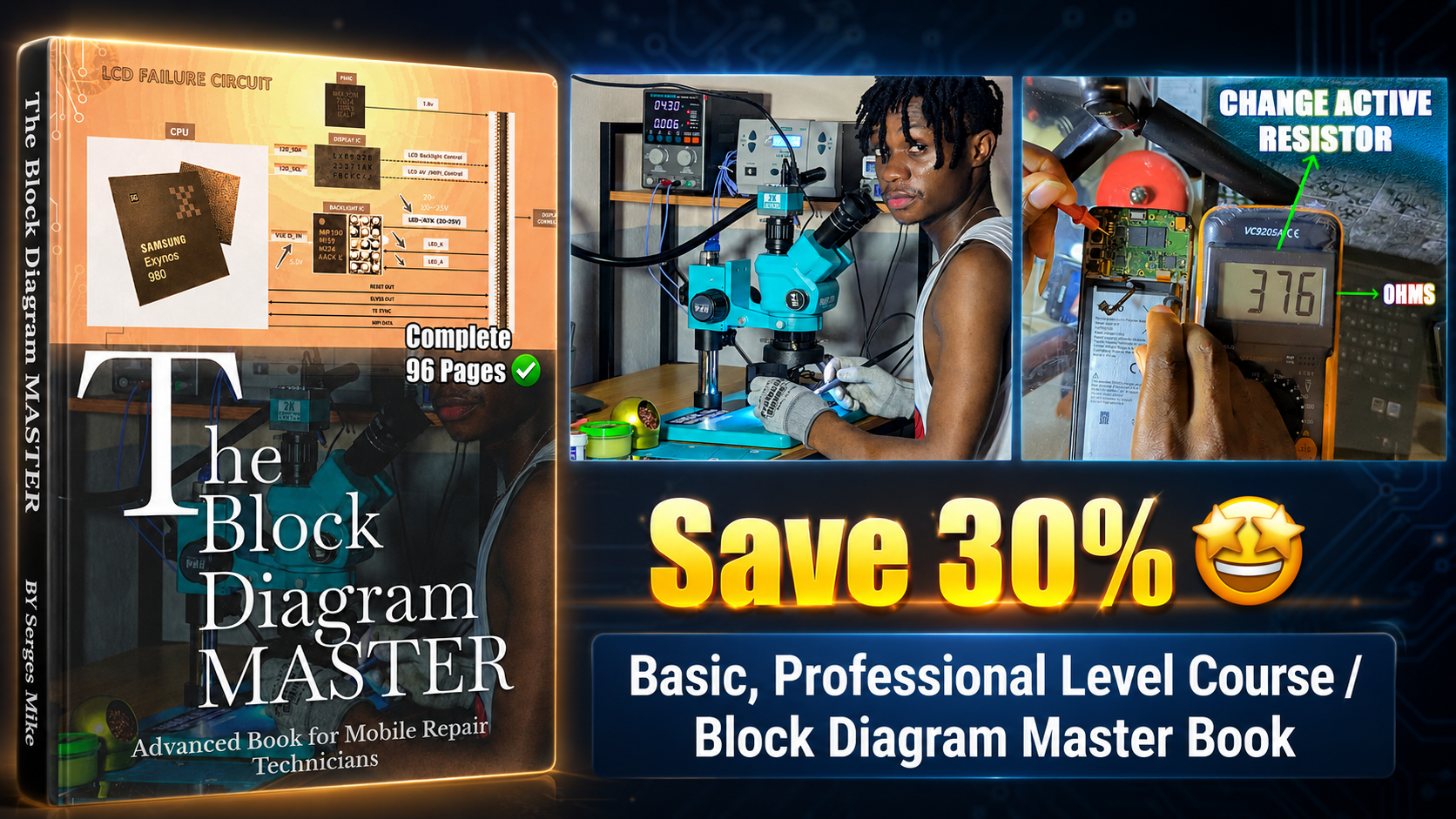
All PlayFix courses and the Block Diagram Master Book in one lifetime purchase.
A shorted rail pulls voltage to ground and can make a phone dead, hot or unable to charge. The usual approach is to confirm the short with a multimeter, inject a limited voltage, then locate the heating component with a thermal camera, rosin flux or by touch.
Confirm the short with the multimeter diode or resistance mode. Inject a limited voltage and current into the shorted line. Locate the hot component with a thermal camera or rosin flux. Remove the faulty capacitor or IC and re-test the line.